
(a continuation from last month’s post)
Being a creative person is hard. No joke. Coming up with your ideas and executing it isn’t as simple as writing a few words and numbers. As much non-creatives will believe to be the case, creativity is a skill that constantly needs to be cultivated. It’s not a lighting-in-a-bottle moment; that is called inspiration. Creativity itself is a discipline, a practice. And as a practice, you have to sharpen yourself.
Over the years, what folks have seen as mundane is the catalyst for my idea farming. Observations, the places I’ve visited, the interactions I had with people from all walks of life. Humanity has so much flavor that it’s hard to divorce the impact people have done to each other. I want to honor that notion in my narrative work. But how is it done?
Well, it’s simple as offering your own view point. A viewpoint that is unique to yourself. There’s so many ideas, but no one has the same execution. Hone and refine your ideas in a notebook, app, anything that you jot down. Your interpretation of events will differ from another person’s. There’s no one to one. Even if following someone’s footsteps to the minute, the end results will vary slightly from your own biases.
Even so, the steps to accomplish a work should also be clear. At least, it shows a path where you intend on ending. Most good work have a roadmap where the idea travels and transforms into art, a message. That process is also honored; you must embrace the turns and willing to be flexible to see what you initially thought it will be will end up vastly different. Concrete to loose abstracts, whatever it be the case.
Lastly, the most important (in opinion):
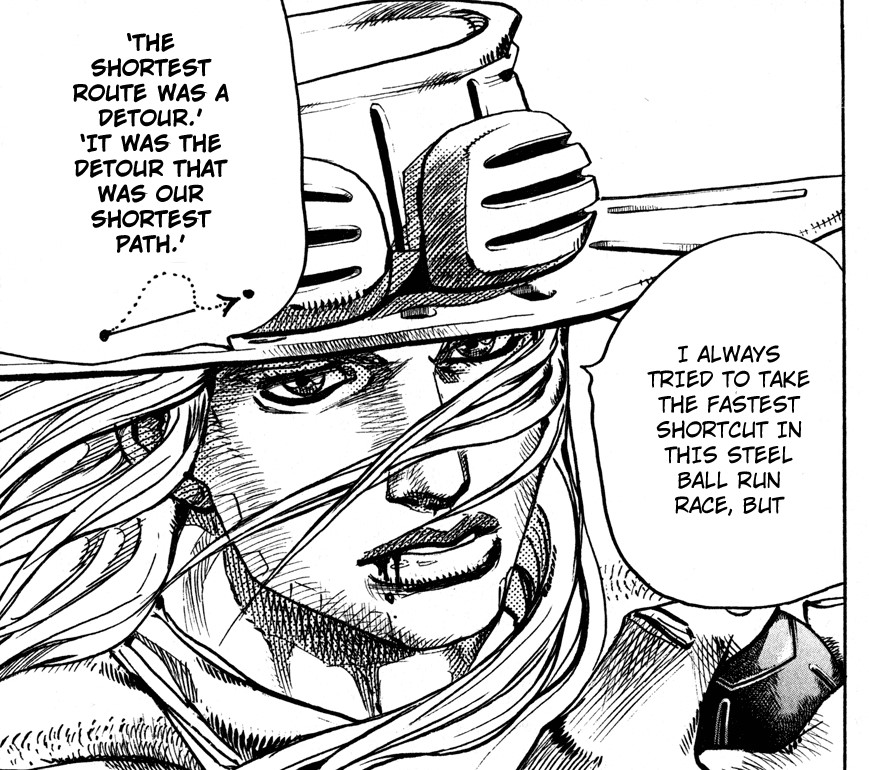
In lieu of the process, you must also appreciate the journey to get there. Goals are important, but a goal is nothing unless you imbue the sacrifices behind it. Sacrifices such as your time, your energy, priorities to make a work a reality. I don’t mean forgo everything in life for the sake of creation, but know when you need to use your energy to make it happen no matter how many setbacks or milestones you hit.
I’ve been thinking about this lately as the conversation about AI has proliferated in my creative communities. There is something fundamentally lost when someone relies on a machine to help foster the creative process, and in turn, becomes an inferior work. It’s disappointing really when the spirit of making is censored by corporations, or by persons actively stifling unique voices for the mainstream.
I still think about my processes back then, because I too was subjected by this when initially working the beginning for Only In Your Dreams!. The entire story was going to a different route but it resulted into something that is far divorced from the original alteration. In shorter terms, a form of self-censorship. As I may regret it, it has happened. At least I can include those ideas in the later chapters moving forward.
As a person who enjoys creating for the sake of the process, consider thinking why you make things. What drives you to tell a story? But at least, I hope you know where your destination lies.